
-

Femoral Sheath: Anatomy and Function
The femoral sheath is a vital anatomical structure located in the upper thigh region. It plays a crucial role in housing and providing support to the femoral vessels. Understanding its anatomy and function is essential for healthcare professionals, as it has clinical significance in various medical procedures and conditions. Let’s explore the femoral sheath in Continue reading
-
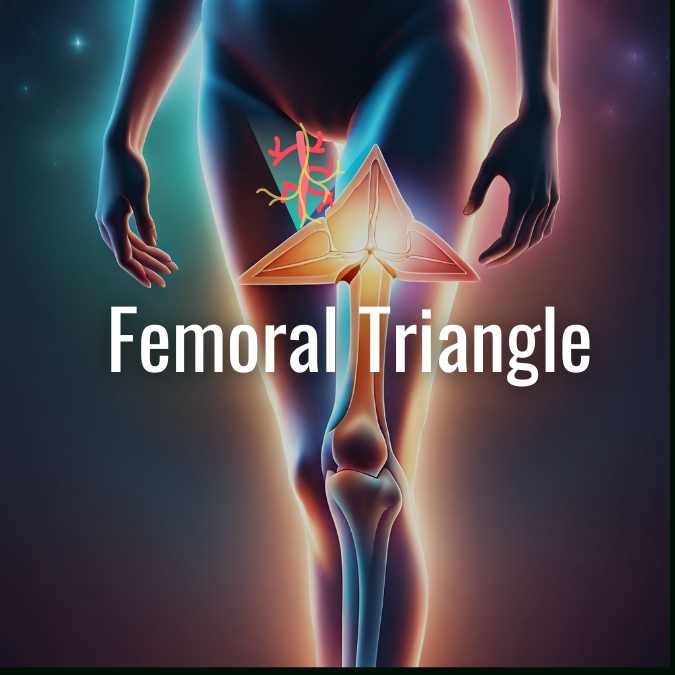
Femoral Triangle: A Comprehensive Guide
The femoral triangle is a triangular depression located on the front of the upper one-third of the thigh, just below the inguinal ligament. It serves as an important anatomical landmark in the thigh region. Let’s explore the boundaries, contents, and clinical significance of the femoral triangle. Definition and Boundaries Boundaries Description Superior/Base Inguinal ligament Lateral Continue reading
-

Popliteal Fossa
The popliteal fossa is a unique anatomical feature located behind the knee joint, formed by the lower part of the femur and the upper part of the tibia. This rhomboid-shaped depression is of great clinical importance due to the presence of various structures and their interactions within this region. It’s counterpart in the upper limb Continue reading
-
Hip Joint: Structure, Function, and Clinical Considerations
The hip joint is a synovial joint known for its stability and mobility. It is a multi-axial ball and socket joint, allowing movement in multiple directions. In this article, we will explore the anatomy, ligaments, movements, blood supply, and nerve supply of the hip joint, as well as some important clinical considerations. Anatomy of the Continue reading
-

Knee Joint: Structure, Function, and Clinical Considerations
The knee joint is a complex synovial joint that plays a crucial role in lower limb movement and stability. In this article, we will explore the anatomy, ligaments, bursae, and movements of the knee joint, as well as some important clinical considerations. Anatomy of the Knee Joint The knee joint consists of two condylar joints Continue reading
-
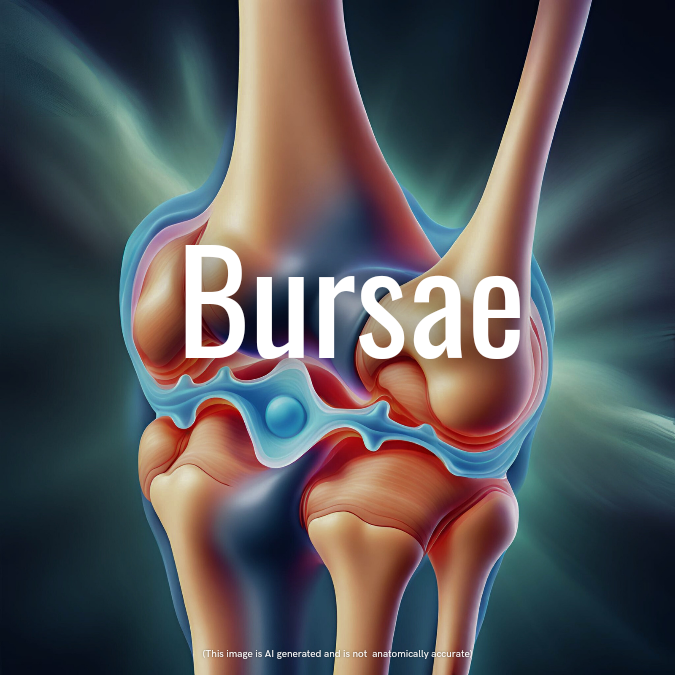
Bursae of the Lower Limb and Associated Clinical Conditions
The lower limb contains several bursae, which are fluid-filled sacs that help reduce friction between tissues. In this article, we will explore the bursae of the lower limb and their associated clinical conditions. Weaver’s Bottom: This condition refers to the inflammation of the bursa over the ischial tuberosity, which occurs as a result of excessive Continue reading
-

Anatomical Snuffbox
The anatomical snuffbox is a fascinating triangular depression located on the dorsolateral aspect of the hand. Its unique name originates from its historical use as a container for holding snuff, a type of ground tobacco. In this article, we delve into the anatomy, boundaries, contents, and clinical significance of the anatomical snuffbox. Anatomy of the Continue reading
-

Carpal Tunnel
The carpal tunnel is a crucial anatomical structure located in the wrist region. It serves as a passageway for important structures, including the long flexor tendons and the median nerve. This WordPress post delves into the details of the carpal tunnel, its components, anatomical borders of the flexor retinaculum, and clinical considerations. Anatomy of the Continue reading
-
Cubital Fossa
In this article, we will delve into the cubital fossa or Chelidon, a triangular depression located in front of the elbow. It serves as a significant transitional area between the arm and the forearm, playing a crucial role in various clinical procedures. Let’s explore the cubital fossa in detail: Introduction The cubital fossa is a Continue reading
-
Axilla
The axilla, often referred to as the armpit, is a crucial anatomical region connecting the upper limb to the trunk. In this WordPress post, we will explore the anatomy and clinical considerations related to the axilla. Anatomy of the Axilla We can describe the axilla as a four-sided pyramid with its base directed laterally and Continue reading
Category: Anatomy Simplified
Discover the essence of anatomy with simplified guides. Navigate the complexities of the human body through clear explanations and structured inquiry.
Definition
Anatomy is the scientific study of the structure and organization of living organisms, providing the physical map of life.
Etymology
Derived from the Greek “anatomē” (dissection) and “tomē” (cutting), reflecting its origins in physical exploration.
Historical Origins
The study of anatomy is as old as medicine itself, rooted in the curiosity of ancient civilizations.
- •
Ancient Foundations: Documentation of human structure traces back to Egypt and Mesopotamia. - •
Pioneering Figures: The field was shaped by Galen and the artistic precision of Leonardo da Vinci. - •
The Father of Anatomy: Andreas Vesalius revolutionized the field through direct human dissection.
Clinical Significance
For the medical student, anatomy is the language of medicine. It provides the essential framework for understanding the body’s structure—vital for accurate diagnosis, treatment, and surgical precision.