
-
Ossification
Ever wondered how bones actually form? Let’s explore the journey of bone formation, focusing on intramembranous and endochondral ossification. From early development in fetal life to the continuous process in adulthood, bone formation is a detailed and impressive process. Ossification, or bone formation, starts in fetal life when existing connective tissue is replaced. Intramembranous ossification Continue reading
-
Connective Tissue
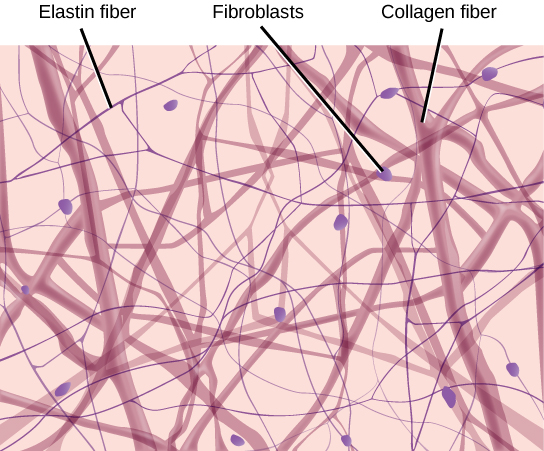
Connective tissue is the unsung hero of our body, holding everything together and ensuring smooth operation. It binds tissues and supports metabolic exchanges, thanks to its rich mix of collagen and glycosaminoglycans. This dynamic matrix not only maintains tissue strength but also defends against threats. Thus, by exploring its crucial role, we uncover its significance Continue reading
-
Types of Glands
Glands are fascinating and essential parts of our bodies, each with unique roles and features. They can be classified based on their structure, similar to the epithelia, but also the type of secretion they produce, and how they release it. Understanding these differences helps us appreciate how our bodies function and stay healthy. Let’s dive Continue reading
-
Eosinophilic vs Basophilic: How to tell the difference
You’re probably here because the words eosinophilic, acidophilic and basophilic keep coming up in texts, and you are utterly confused at this point. As a former medical student, I share that pain, and I have created this article to clear this out for you once and for all. Check out the other article for more Continue reading
-
Types of Epithelium
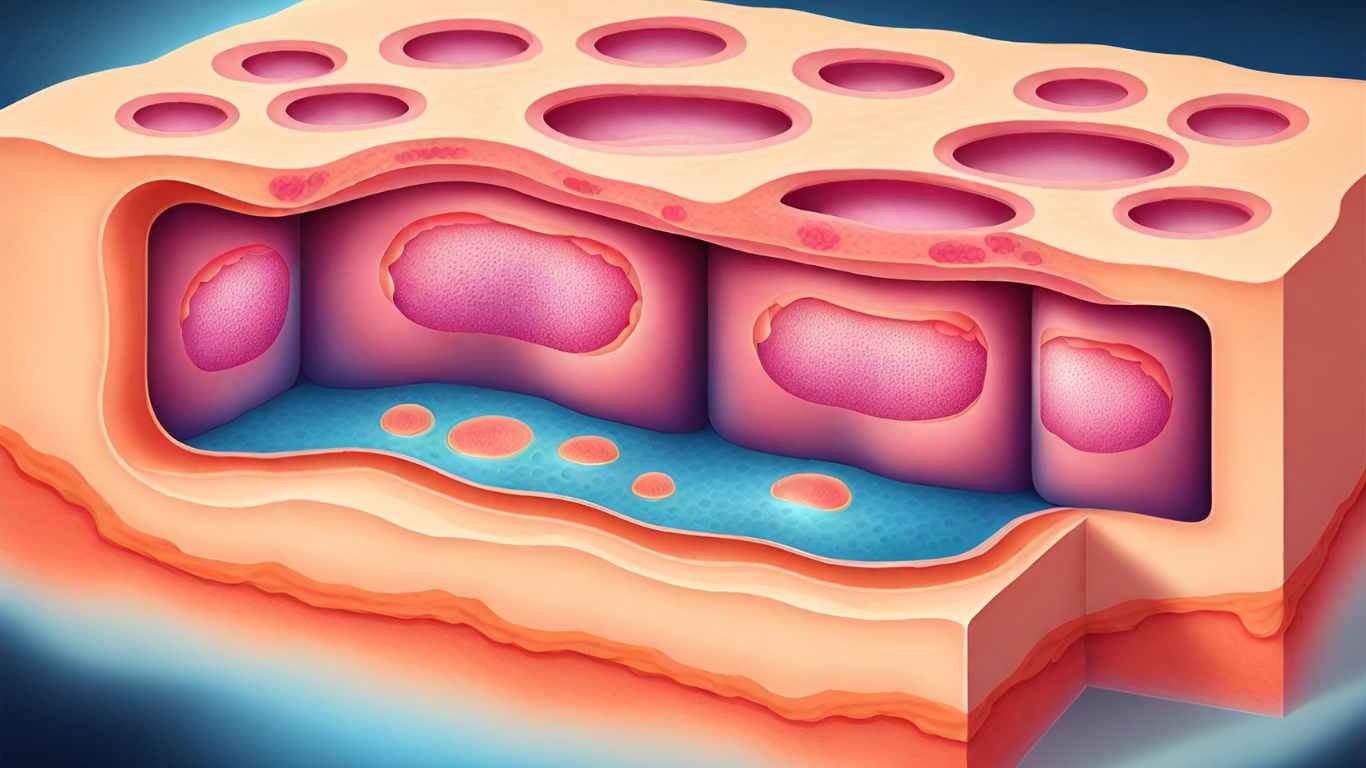
Epithelium is what covers all the internal and external surfaces of our bodies. This article dives into the diverse types of epithelium, from simple squamous to transitional, understanding their structures and functions. Learn about their locations and roles in various bodily systems. To learn how to correctly identify and name epithelia, see the article on Continue reading
Category: Histology
Exploring the microscopic architecture of life: From cellular specialization to the intricate formation of biological tissues.
Histology serves as the visual bridge between cytology and gross anatomy. By examining how cells divide, proliferate, and differentiate, we uncover the microscopic foundations that allow the human body to function as a unified organism.
The Nature of Tissues
A tissue is a collective of cells with similar morphology and embryonic origin, working in synchronization to execute specific physiological tasks. These groupings are the essential precursors to organ development.
Primary Classifications
All animal tissues are categorized into four fundamental types, each defined by its unique structural characteristics and functional roles:
- •
Epithelial Tissue: Specialized for protection, secretion, and absorption; it forms the boundaries between different environments. - •
Connective Tissue: The most abundant tissue type, providing structural support, metabolic transport, and immune defense. - •
Muscle Tissue: Composed of elongated cells capable of contraction to produce movement and heat. - •
Nervous Tissue: Engineered for rapid communication through the generation and conduction of electrochemical impulses.
Clinical Importance
Mastering histology is vital for medical students, as it forms the basis of histopathology. Recognizing the “normal” microscopic structure is the only way to identify the “abnormal” changes that signal disease, malignancy, and systemic dysfunction.